


In a busy urgent care clinic in Dickinson, TX, one patient may leave an exam room just minutes before another arrives. Between coughs, shared equipment, frequent door openings, and constant foot traffic, maintaining a clean medical environment requires more than an occasional wipe-down. For clinics serving patients throughout Galveston County, consistent disinfection is an essential part of daily operations.
Keeping an urgent care clinic disinfected all day requires a combination of between-patient cleaning, high-touch surface disinfection, scheduled maintenance, and professional medical facility cleaning. Staff must follow appropriate disinfectant contact times, use products suitable for healthcare environments, and pay attention to surfaces that multiple patients and employees touch throughout the day.
What Dickinson Urgent Care Clinics Should Know
-
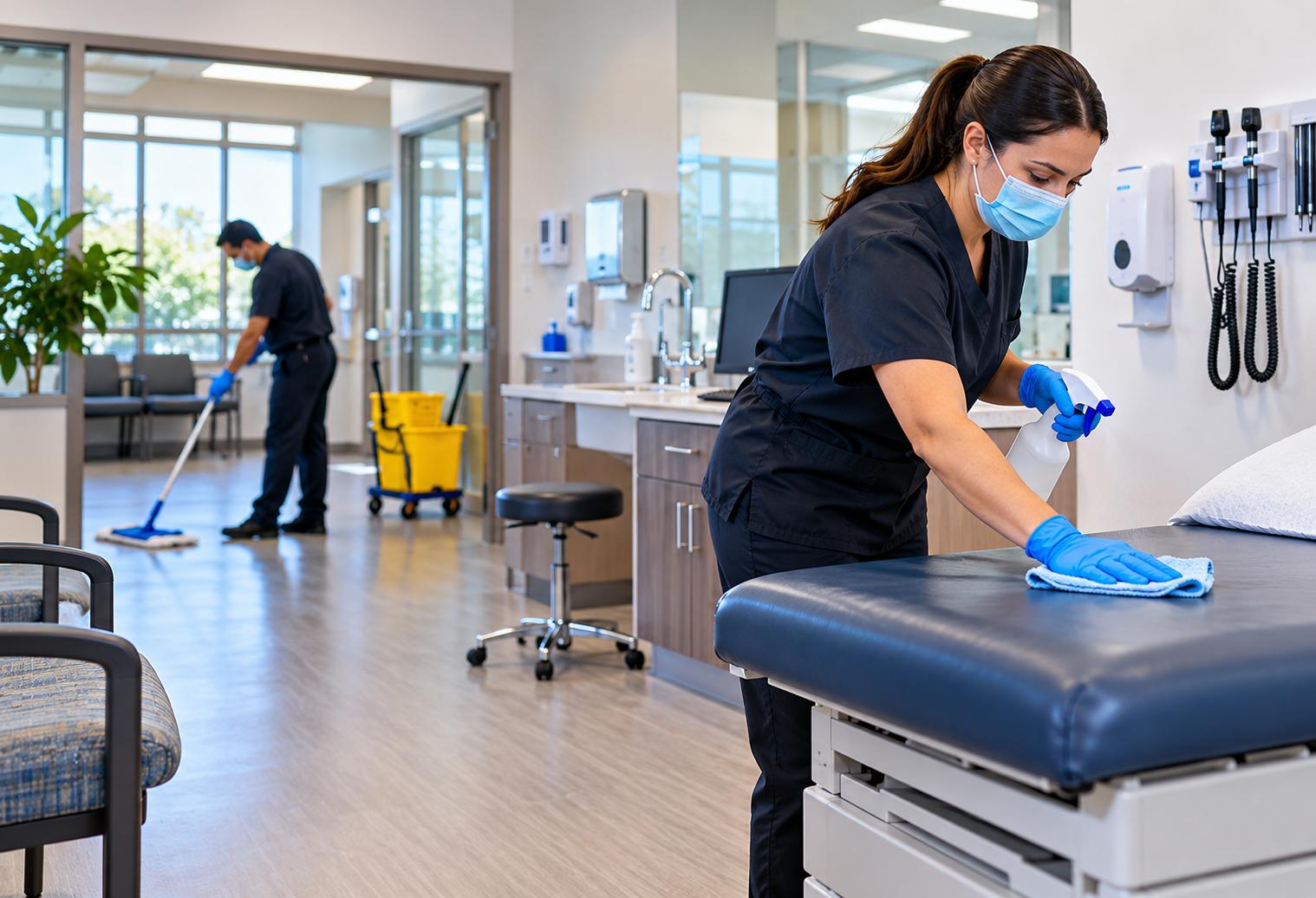
Between-patient disinfection is essential. Exam tables, frequently touched equipment, countertops, and other patient-contact surfaces should be cleaned and disinfected as appropriate before the next patient enters.
-
Gulf Coast humidity creates additional maintenance concerns. Dickinson’s humid climate can contribute to moisture accumulation in entryways, restrooms, and other areas requiring regular attention.
-
High-traffic areas need repeated cleaning. Waiting rooms, reception counters, door handles, and payment terminals can accumulate contamination throughout the day.
-
Disinfectant contact time matters. Healthcare disinfectants must remain on surfaces for the time specified on their labels to achieve their intended effectiveness.
-
Professional cleaning supports daily infection prevention. Routine environmental cleaning complements the disinfection tasks performed by clinical staff between patients.
For medical facilities near Interstate 45, League City, and Texas City, maintaining a consistent cleaning routine helps support patient confidence while reducing preventable disruptions.
The Maincor Group recognizes the importance of maintaining clean, functional environments for local healthcare businesses. We understand that urgent care facilities operate on demanding schedules, making dependable cleaning procedures and careful attention to high-contact surfaces especially valuable.
How Urgent Care Clinics Maintain Disinfection Between Patients
Urgent care clinics maintain disinfection between patients by cleaning and disinfecting frequently touched surfaces, shared medical equipment, and patient-contact areas before the next appointment. In Dickinson, where clinics may serve both scheduled and walk-in patients, standardized room turnover procedures help employees maintain consistent cleaning practices without overlooking essential steps.
A typical between-patient process includes:
-
Removing disposable supplies and appropriately disposing of used materials.
-
Cleaning visible soil from exam tables, countertops, and other applicable surfaces.
-
Applying an appropriate healthcare disinfectant according to the manufacturer’s instructions.
-
Allowing the disinfectant to remain wet for the required contact time.
-
Cleaning reusable noncritical equipment according to facility procedures and manufacturer guidance.
-
Restocking supplies and confirming the room is ready for the next patient.
Staff should also follow facility protocols for gloves, hand hygiene, and other protective equipment.
The objective is not simply to make the room appear clean. It is to reduce environmental contamination while supporting safe and efficient patient care.
Local Data and Practical Cleaning Observations
Local urgent care cleaning requirements are shaped by patient traffic, facility layout, environmental conditions, and healthcare infection prevention guidance. The Centers for Disease Control and Prevention recommends risk-based environmental cleaning practices, with particular attention to frequently touched surfaces and patient-care areas.
For Dickinson medical facilities, several local conditions deserve consideration.
Humidity and moisture: Galveston County’s humid Gulf Coast environment can contribute to damp floors, condensation, and moisture buildup. Entryways, restrooms, and areas around plumbing should be monitored for moisture problems.
Variable patient volume: Clinics near major commuter routes, including Interstate 45 and FM 517, may experience changing patient demand throughout the day. Cleaning schedules need enough flexibility to accommodate busy periods.
Seasonal weather: Heavy rainfall and Gulf Coast storms can introduce mud, standing water, and additional debris into medical facility entrances.
These are regional operating considerations, not findings from a specific clinic inspection. Each facility should evaluate its own patient flow, environmental conditions, and infection prevention requirements.
How Inconsistent Disinfection Affects Local Medical Facilities
Inconsistent disinfection can leave frequently touched surfaces contaminated, interrupt patient room turnover, and weaken confidence in a healthcare facility’s cleanliness. For urgent care clinics in Dickinson, reliable cleaning routines help support infection prevention while allowing employees to concentrate on patient care.
Potential consequences of inconsistent cleaning include:
-
Increased opportunities for germs to spread through contaminated surfaces.
-
Delays when examination rooms require additional cleaning before reuse.
-
Unpleasant odors or visible buildup in patient waiting areas.
-
Additional workload for clinical staff.
-
Patient concerns about facility hygiene.
A clean appearance alone does not confirm that a surface has been properly disinfected. Effective cleaning programs require appropriate products, procedures, and verification.
Warning Signs That an Urgent Care Clinic Needs Better Cleaning Procedures
Warning signs of inadequate clinic cleaning include recurring surface residue, overlooked touchpoints, inconsistent room turnover, and visible moisture or debris. Dickinson facility managers should watch for problems that continue despite routine cleaning.
Common warning signs include:
-
Sticky reception counters or check-in surfaces: Residue may indicate insufficient cleaning or improper product use.
-
Frequently overlooked door handles: High-contact surfaces may not be included in routine cleaning checklists.
-
Visible dust around exam room fixtures: Less accessible areas may be receiving inadequate attention.
-
Restroom odors that return quickly: Cleaning frequency or underlying plumbing and ventilation issues may need evaluation.
-
Dirty entrance flooring: Rainwater and outdoor debris may be spreading into patient areas.
-
Unclear room turnover responsibilities: Employees may be uncertain about who cleans specific equipment or surfaces.
-
Disinfectant surfaces drying too quickly: Staff may not be meeting the product’s required wet contact time.
Repeated problems should prompt a review of cleaning procedures, staff training, product selection, and assigned responsibilities.
When Should Urgent Care Clinics Call Professional Cleaners?
Urgent care clinics should consider professional cleaning support when routine housekeeping tasks exceed staff capacity, high-traffic areas require more frequent attention, or consistent environmental cleaning becomes difficult to maintain. Healthcare facilities in Dickinson can benefit from clearly defined cleaning responsibilities that complement their internal infection prevention procedures.
Clinical personnel generally handle immediate patient-care cleaning responsibilities according to facility policy. A qualified cleaning provider may support scheduled environmental cleaning of appropriate exam room surfaces, floors, waiting areas, restrooms, and other designated spaces.
Facilities should confirm that any provider understands applicable healthcare cleaning requirements, approved disinfectants, personal protective equipment, and restrictions involving medical equipment or regulated waste.
Professional environmental cleaning does not replace clinical infection prevention protocols.
Common Causes of Cleaning Gaps in Dickinson Urgent Care Facilities
Cleaning gaps in urgent care clinics often result from heavy patient traffic, unclear staff responsibilities, inadequate cleaning frequency, or improper disinfectant application. Local weather and building conditions can add maintenance challenges for healthcare properties throughout the Dickinson Bayou area.
High Patient Turnover
When several patients arrive close together, employees may feel pressured to prepare exam rooms quickly. A standardized cleaning checklist helps reduce missed steps.
High-Touch Surface Contamination
Waiting room chairs, door handles, counters, and payment terminals receive frequent contact. These surfaces require cleaning frequencies appropriate to their use and contamination risk.
Humidity and Water Intrusion
Moisture from rain, condensation, or plumbing issues can contribute to unpleasant odors, damaged materials, and microbial growth. Disinfection alone does not correct an ongoing moisture source.
Inconsistent Cleaning Products
Using an unsuitable disinfectant or failing to follow its label instructions can reduce effectiveness. Product compatibility with medical facility surfaces also matters.
Incomplete Staff Communication
Without assigned responsibilities, some areas may be cleaned repeatedly while others are overlooked.
Prevention and Daily Maintenance for Medical Facilities
Preventing cleaning gaps requires written procedures, consistent staff training, appropriate supplies, and regular checks of high-risk areas. Urgent care clinics in Dickinson should build cleaning schedules around actual patient volume, environmental conditions, and facility-specific infection prevention policies.
A practical daily maintenance approach includes:
Before opening:
-
Inspect patient waiting areas, restrooms, and exam rooms.
-
Confirm cleaning supplies and approved disinfectants are available.
-
Check entrances for moisture, debris, or slipping hazards.
Between patients:
-
Clean and disinfect designated patient-contact surfaces.
-
Reprocess reusable equipment according to applicable instructions.
-
Observe disinfectant contact times.
Throughout the day:
-
Monitor high-touch surfaces and restrooms.
-
Address spills and visible contamination promptly.
-
Replace overflowing waste containers according to facility policy.
After closing:
-
Complete scheduled environmental cleaning.
-
Inspect floors, fixtures, and designated common areas.
-
Document outstanding maintenance concerns.
During rainy Gulf Coast weather, additional entrance floor inspections may be necessary.
What Results Should Clinics Expect From Consistent Disinfection?
Consistent disinfection should produce cleaner patient-care environments, more predictable room turnover, and better adherence to established infection prevention procedures. For Dickinson healthcare facilities, the goal is a repeatable process that supports daily operations rather than a one-time deep cleaning.
A well-managed cleaning program may help clinics achieve:
-
More consistent cleaning of frequently touched surfaces.
-
Clearer accountability for daily housekeeping responsibilities.
-
Faster identification of recurring maintenance concerns.
-
Improved appearance of waiting rooms and patient-care spaces.
-
Better documentation of completed cleaning tasks.
No cleaning service can guarantee a germ-free environment or eliminate every infection risk. Effective infection prevention also depends on hand hygiene, equipment reprocessing, appropriate precautions, and clinical practices.
Common Urgent Care Cleaning Mistakes and Better Alternatives
Common urgent care cleaning mistakes involve rushing disinfectant application, overlooking shared surfaces, and relying on visual cleanliness as proof of proper disinfection. Clinics in Galveston County can reduce these problems through written procedures and routine quality checks.
| Common mistake | Possible consequence | Better approach |
|---|---|---|
| Wiping disinfectant away immediately | Required contact time may not be achieved | Follow the product’s label instructions |
| Using one cloth across multiple areas | Contamination may transfer between surfaces | Follow approved cloth and cleaning procedures |
| Cleaning only visible dirt | Frequently touched surfaces may be missed | Use a documented high-touch surface checklist |
| Ignoring damp entrance floors | Slip hazards and debris can accumulate | Increase inspections during wet weather |
| Relying only on end-of-day cleaning | Surfaces may remain contaminated between patients | Combine continuous cleaning with scheduled services |
The strongest approach addresses both immediate patient-care needs and broader facility maintenance.
Common Local Scenario: A Busy Dickinson Walk-In Clinic
A common local scenario involves a walk-in clinic experiencing a sudden increase in patient arrivals during the afternoon. Reception staff are assisting patients, examination rooms are turning over quickly, and restroom use increases as more visitors enter the building.
Clinical staff continue disinfecting patient-contact surfaces between visits, but shared waiting areas and entrance floors also need attention.
A structured cleaning plan assigns responsibility for room turnover, establishes recurring checks of common areas, and schedules additional environmental cleaning outside peak patient hours.
This example illustrates a typical operational challenge rather than a documented project.
Related Cleaning Services That Support Urgent Care Clinics
Professional medical facility cleaning services can support urgent care clinics through scheduled surface cleaning, floor care, restroom sanitation, and other environmental maintenance tasks. In Dickinson, these services can be particularly useful for clinics managing frequent patient turnover and demanding operating hours.
Depending on the facility’s needs and a provider’s qualifications, relevant solutions may include:
-
Routine medical office cleaning.
-
High-touch surface cleaning and disinfection.
-
Waiting room and reception area maintenance.
-
Restroom cleaning and sanitation.
-
Hard floor cleaning and maintenance.
-
Scheduled after-hours cleaning.
At The Maincor Group, we encourage healthcare facility managers to evaluate cleaning needs according to their specific building layout, operating schedule, and infection prevention policies.
Comparing In-House Cleaning and Professional Cleaning Support
In-house cleaning and professional environmental cleaning serve different but complementary purposes. Urgent care clinics in Dickinson generally need immediate cleaning between patients, while scheduled professional services may help address broader facility maintenance needs.
| In-house cleaning | Professional cleaning support |
|---|---|
| Immediate exam room turnover | Scheduled facility-wide cleaning |
| Patient-contact equipment cleaning | Designated environmental surface cleaning |
| Rapid response to spills | Routine floor and restroom maintenance |
| Direct coordination with clinical procedures | Supplemental cleaning labor and consistency |
| Ongoing patient-care responsibilities | Support during approved service hours |
The right combination depends on patient volume, staffing, cleaning scope, and the provider’s healthcare cleaning qualifications.
Service Areas Around Dickinson, TX
Medical facilities in Dickinson and nearby communities such as League City, Santa Fe, Texas City, and La Marque face many of the same Gulf Coast cleaning challenges. Healthcare property managers throughout this part of Galveston County should consider patient traffic, weather exposure, and facility operations when planning environmental cleaning.
The Cost of Ignoring Urgent Care Cleaning Problems
Ignoring recurring cleaning problems can increase maintenance demands, create avoidable workflow interruptions, and leave contamination concerns unresolved. For urgent care clinics in Dickinson, postponing corrective action may also allow moisture damage, flooring deterioration, or persistent sanitation problems to become more difficult to address.
The financial impact depends on the severity of the issue, facility size, staffing, and corrective work required.
Regular cleaning assessments and timely maintenance can help property managers identify problems before they interfere with daily operations.
Frequently Asked Questions About Urgent Care Disinfection
How often should urgent care exam rooms be disinfected in Dickinson, TX?
Urgent care exam rooms should have appropriate patient-contact surfaces cleaned and disinfected between patients according to facility policies and infection prevention guidance. Additional cleaning may be necessary after visible contamination or certain clinical procedures. Dickinson clinics should establish protocols based on patient-care activities, surface risk, and the disinfectant manufacturer’s instructions.
What surfaces require the most attention in urgent care clinics?
Frequently touched surfaces require particular attention, including exam tables, door handles, counters, light switches, chair arms, and shared equipment. Cleaning frequency should reflect contamination risk and usage. Patient-care surfaces may require disinfection between visits, while common-area surfaces should follow an established risk-based cleaning schedule.
Does Dickinson’s humid climate affect medical facility cleaning?
Yes. Dickinson’s humid Gulf Coast climate can contribute to condensation, moisture accumulation, and damp entrance areas, especially during rainy weather. Clinics should monitor moisture-prone spaces, maintain appropriate indoor humidity, and promptly address leaks or water intrusion. Routine disinfection is not a substitute for correcting underlying moisture problems.
Can urgent care clinics use ordinary household disinfectants?
Urgent care clinics should use disinfectants appropriate for their healthcare setting, surfaces, and intended applications. Environmental disinfectants should be EPA-registered when required and used according to their labels. Some household products may not be suitable for particular healthcare uses, equipment materials, or pathogens. Facility infection prevention policies should guide product selection.
Why is disinfectant contact time important?
Disinfectant contact time is the period a product must remain on a surface, typically visibly wet, to achieve its labeled effectiveness. Wiping the surface dry too soon may compromise disinfection. Urgent care employees should follow the specific product label, including any cleaning requirements, dilution instructions, and safety precautions.
Should urgent care clinics near League City schedule after-hours cleaning?
After-hours cleaning can be useful for clinics near League City and Dickinson because it allows certain maintenance tasks to occur with fewer interruptions to patient care. However, it cannot replace necessary cleaning during operating hours. The appropriate schedule depends on clinic traffic, staffing, facility size, and environmental cleaning requirements.
How can Dickinson clinics prepare for rainy-season cleaning challenges?
Dickinson clinics can prepare for heavy rainfall by inspecting entrance mats, monitoring floors for tracked-in water, and addressing drainage or building leaks promptly. Additional floor checks may help reduce slipping hazards. Facilities should also monitor moisture around doors, windows, and plumbing fixtures to identify problems requiring maintenance.
What is the difference between cleaning, sanitizing, and disinfecting?
Cleaning removes dirt, debris, and organic material from surfaces. Sanitizing reduces certain microorganisms to levels defined by applicable standards. Disinfecting uses an appropriate product to inactivate specified microorganisms on surfaces according to label claims. Healthcare facilities often require cleaning followed by disinfection for designated patient-care surfaces.
How should Galveston County urgent care clinics evaluate a cleaning provider?
Galveston County urgent care clinics should evaluate cleaning providers based on their experience with healthcare environments, staff training, disinfectant procedures, insurance, scheduling capabilities, and clearly defined service responsibilities. Managers should also confirm which tasks are included, how quality is checked, and whether the provider can follow the facility’s infection prevention requirements.
Keeping Dickinson Urgent Care Clinics Clean Throughout the Day
Maintaining a disinfected urgent care environment requires attention throughout the day, not just before opening or after closing. Between-patient procedures, high-touch surface cleaning, moisture control, and scheduled professional maintenance all contribute to a more consistent approach.
For healthcare businesses in Dickinson and surrounding Galveston County communities, a practical cleaning plan should reflect the demands of patient care while supporting a clean, welcoming facility.
Support a Cleaner, More Reliable Urgent Care Environment in Dickinson
A consistent cleaning strategy can help healthcare facilities maintain professional spaces, reduce avoidable disruptions, and support daily infection prevention efforts.
Connect with The Maincor Group to discuss your facility’s cleaning needs and determine which service options may be appropriate for your operations.